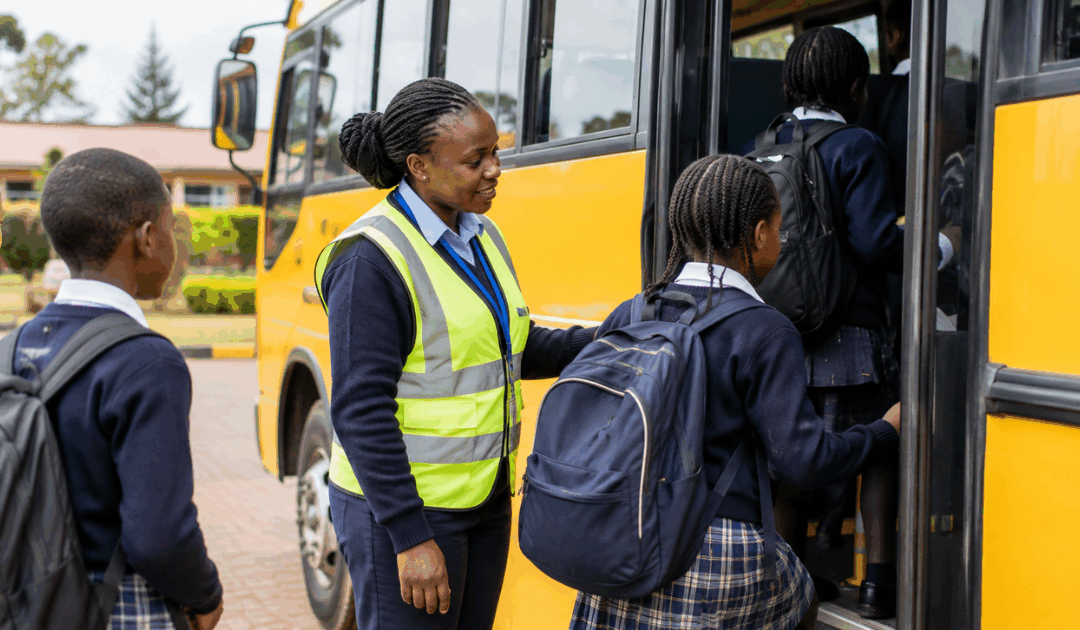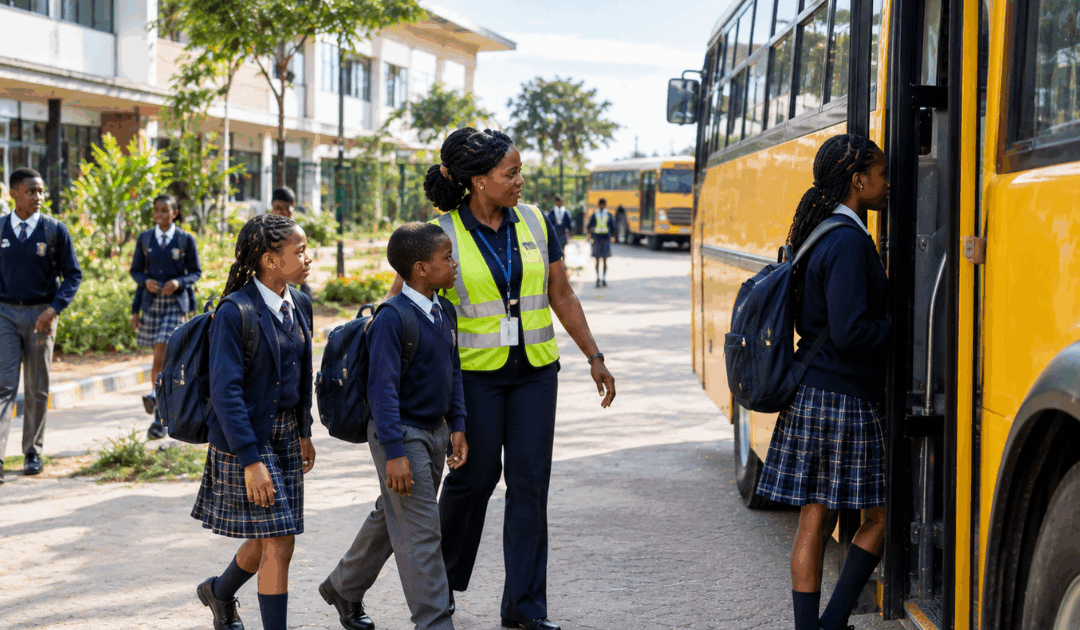
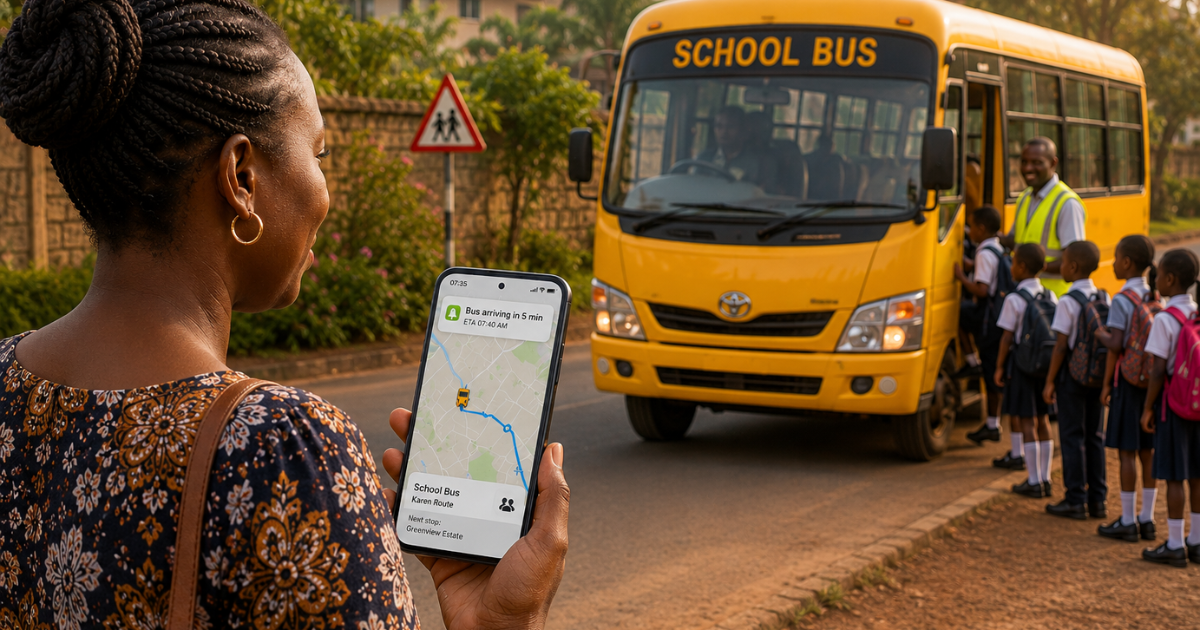
A school can know exactly where its bus is and still have no idea what’s happening to the students inside it. The map shows a dot moving toward the pickup point, but can anyone confirm who actually boarded? Will parents get real updates, or will they just keep refreshing an app? If something goes wrong, can the school reconstruct what happened?
2026 has been a hard year for school transport safety in Kenya. A bus carrying 59 learners overturned near Eldama Ravine in June after reportedly suffering brake failure. In July, two buses carrying 101 pupils collided near Turkwel Dam in West Pokot; 13 people were injured, and one fatality was later confirmed by the West Pokot County Commissioner. In August, a bus taking students to the Kenya Music Festival overturned in Bomet, injuring six. NTSA Road Safety Manager Eva Nyawira has said children account for over 30% of all road crash victims in Kenya.
The government’s response, Rule 14 of the Traffic (School Transport) Rules, 2026, which would have made telematic tracking mandatory, was annulled by the Senate on July 23, 2026, along with two other NTSA instruments, over concerns the rules weren’t properly consulted on. So tracking software is no longer legally required. But the accidents haven’t stopped, and the real question stands: do you actually have enough visibility into what happens to your students on every trip?
What the Software Actually Does
“Bus tracking” isn’t one feature, it’s several bundled together:
- Real-time GPS tells you where the bus is and whether it’s on schedule, but not who’s inside it.
- Parent notifications cover boarding, delays, and drop-off. Channels matter; some parents live on an app, others need SMS.
- Student boarding/alighting tracking (via RFID, QR codes, or mobile scanning) is the most important feature: it answers who boarded, who got off, and where the real gap between tracking a vehicle and tracking a child. For schools evaluating options, Bunifu Go combines real-time tracking, student boarding records, and parent notifications in one platform.
- Driver behaviour monitoring flags speeding, harsh braking, and route deviations before they become incidents.
- SOS/emergency alerts are only as good as who receives them and how fast a panic button routed to an inbox nobody checks isn’t an emergency system.
What Matters for Kenyan Schools Specifically
- Connectivity that survives dead zones: does the system store data locally and sync later, or just lose that stretch of the trip? Ask vendors to demo it on a real route.
- All-in pricing: hardware, installation, SIM/data, maintenance, and per-vehicle fees add up. Get one all-inclusive cost per bus, per month.
- Locally reachable support: know where support is based and how fast issues, especially hardware failures, get resolved.
- Non-smartphone communication: the platform should reach parents without data-heavy apps, via SMS if needed.
- Usability for drivers and staff: a system is only as good as what a driver can operate mid-route or a transport officer can act on quickly. Ask for a live demo, not a slide deck.
Beyond Compliance: Why Records Matter
Even without a legal mandate, good systems create a retrievable record that answers: Where was the bus? What route did it take? Who boarded and when did they get off? Was there a deviation? What happened before, during, and after an incident? Paper logs answer these slowly and incompletely; a digital system doesn’t. Ask how long records are kept, who can access them, and how student data privacy is protected.
Questions to Bring to a Vendor Meeting
| Category | Question |
| Connectivity | What happens when a bus loses network coverage? |
| Cost | What’s the total cost per bus, all-inclusive? |
| Support | Is support based in Kenya, and how fast do they respond? |
| Parents | Can parents get updates without a smartphone app? |
| Students | Can the system log individual boarding/alighting? |
| Drivers | Can we monitor speeding and harsh braking? |
| Records | How long is data retained? |
| Hardware | What’s the process if a device fails? |
| Scalability | Can this grow with us? |
| Proof | Can you demo this on one of our actual routes? |
Common mistakes: buying GPS alone and assuming that’s enough; designing only for the admin dashboard while drivers and staff struggle with it; and forgetting to ask about historical data access.
Where This Leaves You
The real question isn’t “Does the software track our buses?” It’s whether it gives the school and the parents trusting it with their children real clarity into the student’s journey from boarding to arrival. GPS accuracy, offline sync, and SMS alerts are just the mechanics of getting there.
For schools looking for a platform that brings these functions together, Bunifu Go combines real-time vehicle tracking, student attendance, parent SMS and app notifications, and transport management in one system. This means schools can move beyond simply knowing where a bus is to having greater visibility into the student journey.