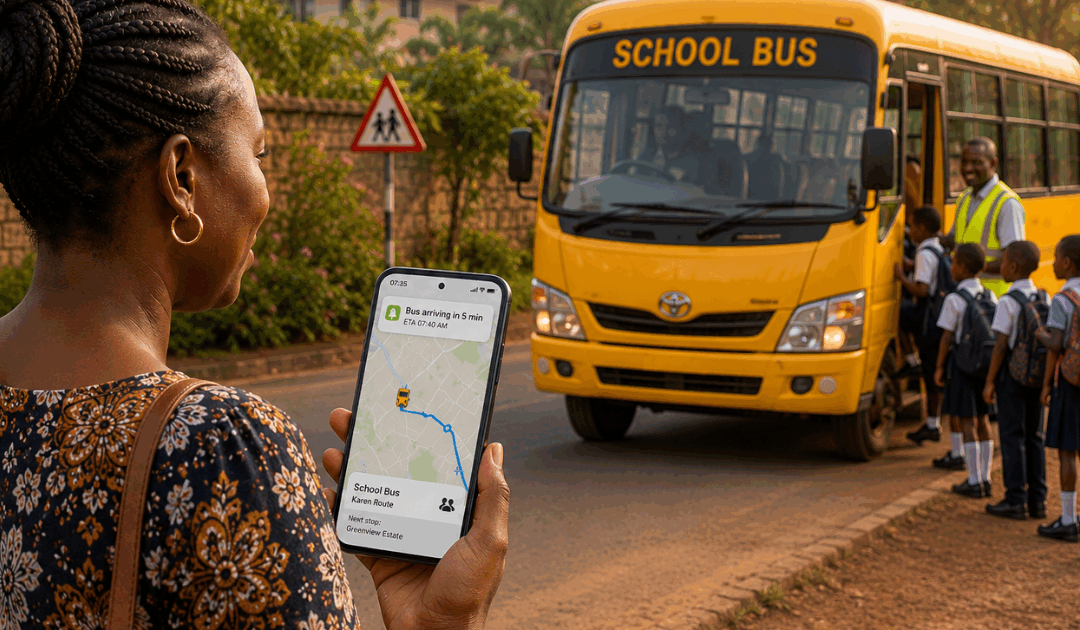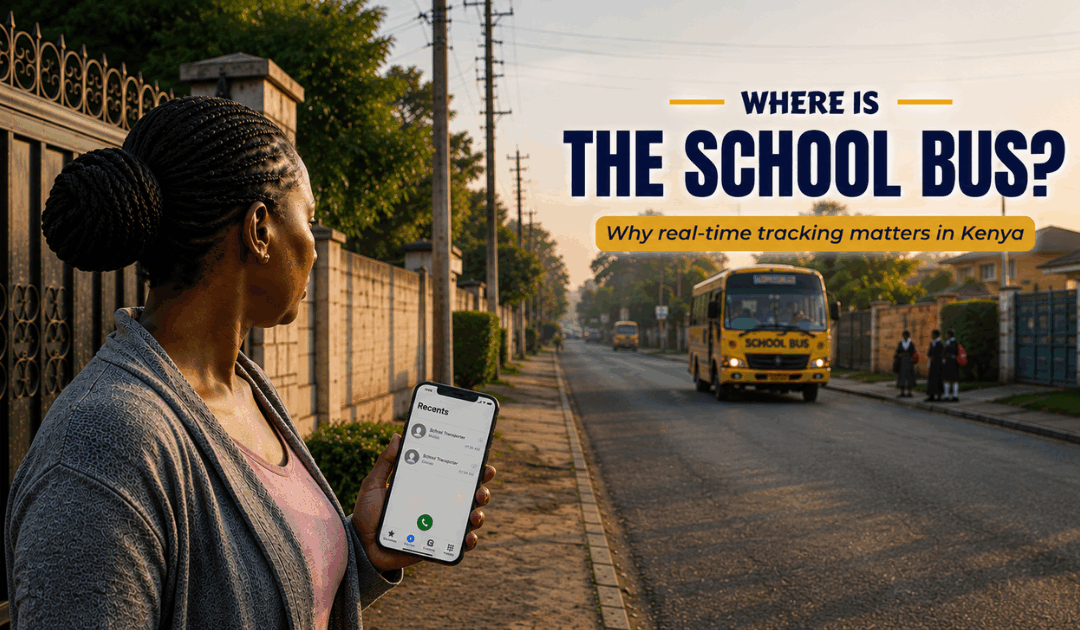
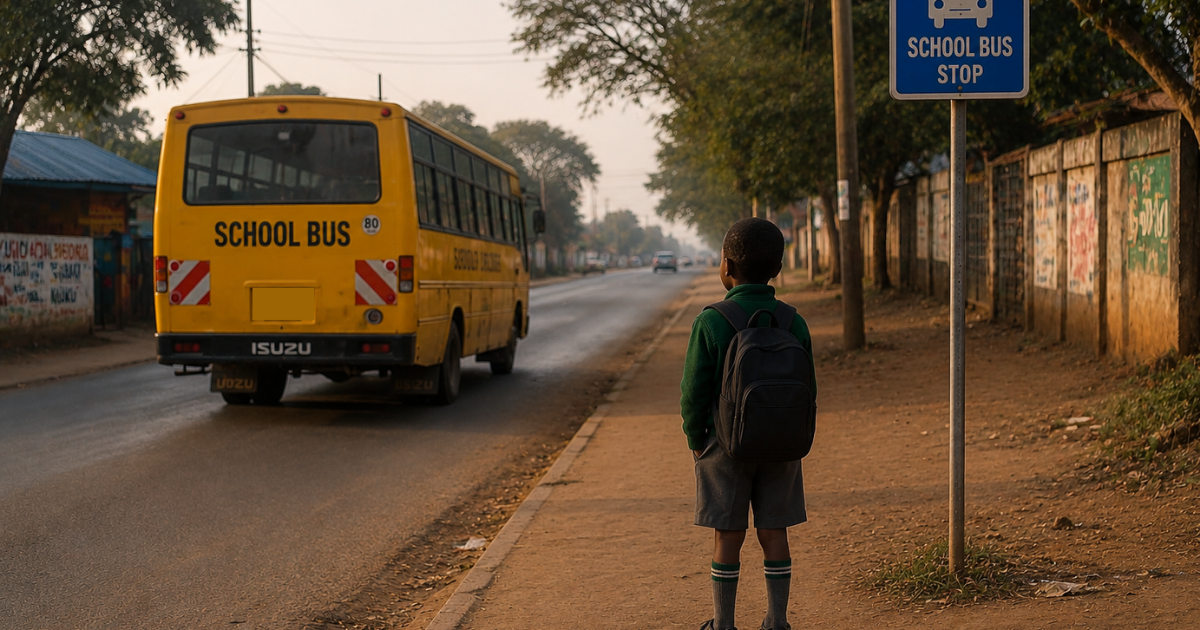
Across Kenya, parents ask versions of the same question every week, usually in the same anxious tone: “The bus reached the stop, but did my child actually get off it? And was someone there to receive them?”
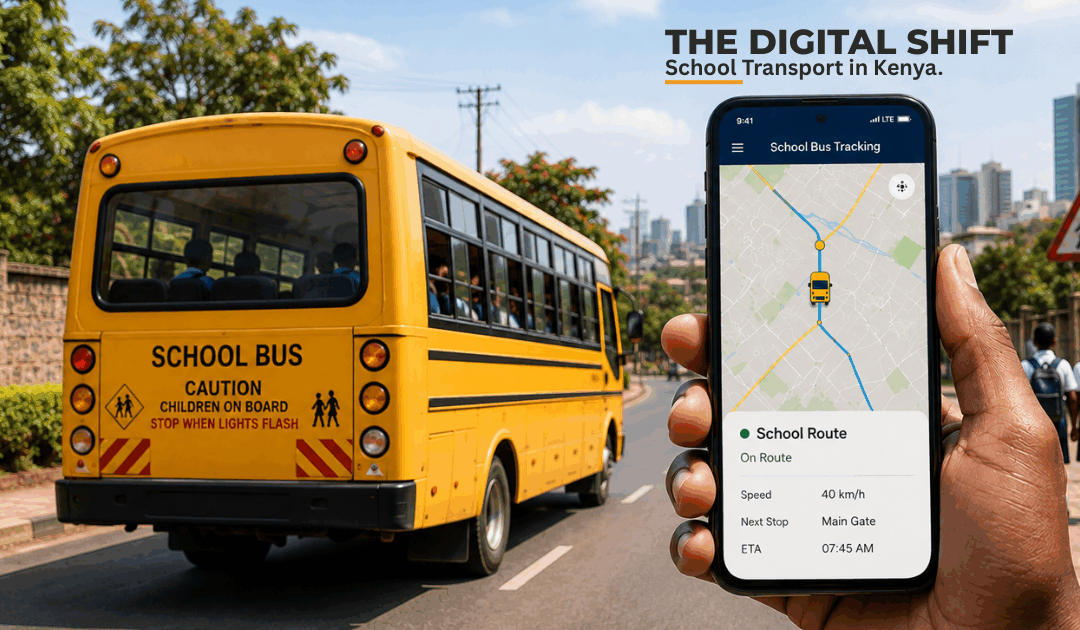
It’s a fair question. It’s also one that GPS tracking alone was never built to answer. A location ping tells you where the bus is on a map. It doesn’t tell you who’s inside it, who got out, when they got out, or whether a parent, guardian, or designated adult was standing at the stop to receive them.
A dot moving along a route and a child’s safety are two different things. For too long, the first has been allowed to stand in for the second.
The gap isn’t rare, and it isn’t hypothetical.
This isn’t a hypothetical edge case dreamed up to sell software. It happens, repeatedly, in systems that are otherwise well-run.
In April 2026, a pre-K student in South Carolina’s Richland Two district was released without a guardian present, a direct breach of the district’s own policy, inside a system that moves over 15,000 students a day. This wasn’t a district with no rules. It was a district whose rules failed at the one moment that mattered most: when the doors opened.
A Toronto-area mother described a similar failure from the other side. Her two young children were let off the bus without anyone confirming whether someone was actually there to receive them. No check. No confirmed handover. Just an open door and the assumption that things would work out.
Kenya has seen how serious that gap can become too. In July 2026, a Grade Two pupil at St Joseph’s Nurturing Academy in Kuria West was killed when the school bus began moving before he had fully alighted, causing him to fall and be run over. According to The Standard’s report on the incident, the boy’s family alleged that no teacher or driver’s assistant was present to ensure he was safely dropped off, while police held the driver as investigations continued.
The circumstances are different, but the underlying question is familiar: can a school confirm what happened to a child at the point of drop-off, rather than simply confirm that the bus reached the stop?
Different countries, different districts, different bus operators, but the same accountability gap. A GPS system can confirm that the vehicle arrived. It cannot, on its own, confirm that the right child got off, that they got off safely, or that the person expected to receive them was actually there.
This is the exact gap we built Bunifu Go to close
Instead of relying on a driver’s memory, a paper register filled out from the front seat while children are moving, or a location pin used as a stand-in for safety, every student on a school bus route using Bunifu Go carries an NFC MIFARE keyfob.
It’s scanned when the student boards and scanned again when the student disembarks. That means each student’s boarding is not inferred from where the bus happens to be; it is recorded, per child, at the moment the event happens.
That distinction matters.
“The bus was near the stop at 7:42” is a location record. It doesn’t establish which child got off.
“Amara’s keyfob was scanned at 7:42:11” gives the school and transport team a child-level record tied to a specific event.
The difference is moving from an assumption based on vehicle location to a record of the student’s interaction with the bus.
Parents don’t just see a moving icon on a map. They receive automatic SMS notifications tied to their child’s recorded journey: when their child is picked up, when they’re dropped off, and when they arrive safely at school. Three distinct, verifiable moments, each one tied to a real event and not a location estimate. The record shifts from a vague, reassuring “the bus reached the stop” to something far more precise: your child was scanned off it, right there, right then.
For a parent checking in on their child’s journey, that difference matters. It’s the difference between hoping the expected event happened and having a recorded event to point to.
We’re direct about what a scan can and can’t tell you.
It would be easy to oversell this. We won’t.
A scan confirms that a student’s keyfob was recorded as they exited the bus. It does not, on its own, confirm a safe handover. A child can be correctly scanned off a bus and still step into a situation nobody intended.
Technology that pretends otherwise isn’t solving the whole problem. It’s simply moving the blind spot somewhere less visible.
That’s why we built Bunifu Go to work alongside school drop-off protocols, not instead of them, particularly protocols that require a known guardian to be present for younger students.
The scan creates a timestamped record that the school can refer back to, showing when the child left the bus. The handover protocol is what makes sure someone was there to receive them.
Neither piece is sufficient by itself.
A scan record paired with an empty stop is still a failure. A strict handover policy with no reliable record of who actually boarded or disembarked is a process that still leaves important questions unanswered.
Schools and transport operators get the strongest result when both pieces are in place together: verified records of each student at the bus door and a clear handover process when they arrive.
That’s the standard we encourage every school we work with to hold itself to.
Answering the question parents are actually asking
Parents don’t ask, “Where is the bus?”
That question is easy to answer and, frankly, isn’t the one that keeps anyone up at night.
What they actually ask, quietly, every school day is:
“Is my child safe?”
That’s a harder question, and it deserves a harder answer than a moving dot on a screen.
GPS can tell you where the bus is. A student-level record can tell you what happened to a particular child on that journey, right there, right then. A proper handover protocol makes sure the child isn’t simply left at the end of it.
Bunifu Go was built to help answer the harder question, not the easier one, not by replacing the people responsible for a child’s safety, but by making sure nothing about the journey there stays invisible.