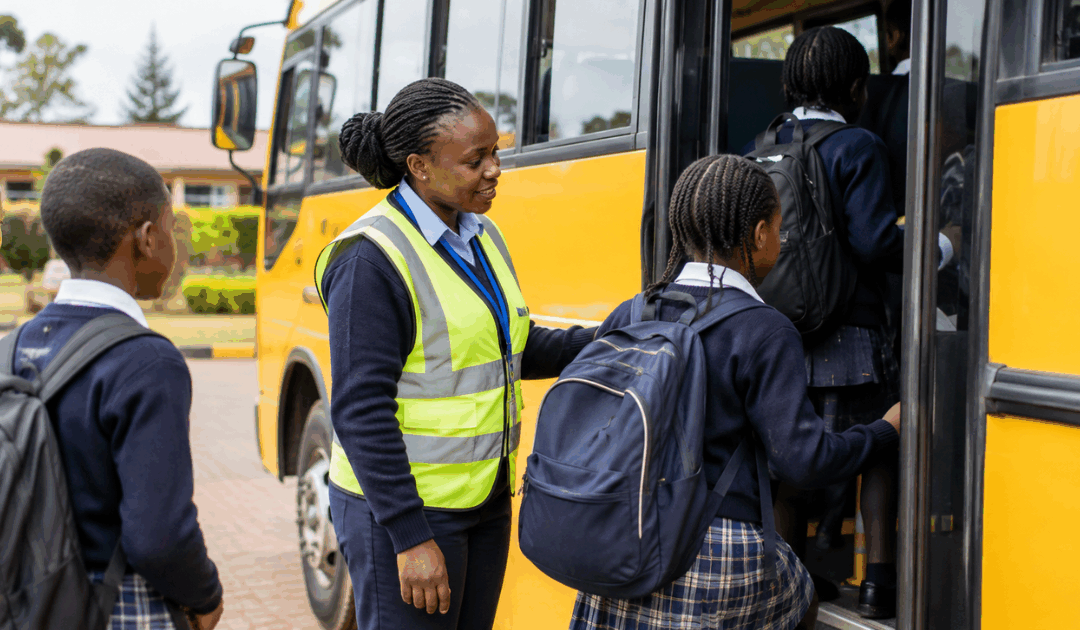

School transport affects families, staff, and the school’s reputation from the first day of term. Yet many schools treat school transport provider selection as a purchase: compare prices, check the vehicles, sign the contract, and move on. A contract can look complete while leaving important questions unanswered. Who is accountable when a bus is late? Who checks the driver? Can the school see which students were recorded as boarding, and can it retrieve those records later?
This article sets out eight areas schools should assess before signing, with questions to ask and warning signs to watch for. The aim is to establish whether the provider can deliver the agreed service and whether the school understands its own responsibilities.
Who Answers for Day-to-Day Failures?
Most transport problems are ordinary. A bus runs late, a pickup is missed, and a delay is not announced. What matters is how quickly the problem reaches someone who can act on it and who informs parents.
Ask who the school’s named contact is and whether that person can be reached during the school day, as well as on the morning run. Ask how a problem moves from the driver to the provider’s operations team and then to the school, and what response times the provider commits to.
If responsibility passes between the provider, the driver, and the school with no clear owner, resolving a problem may take longer than it should, leaving families waiting for answers.
Who Owns, Insures, and Maintains the Vehicles?
Providers take different approaches to their fleets. Some run their own vehicles and employ their own drivers. Others subcontract some or all of the work to smaller operators. Outsourcing is not a problem in itself. Unclear responsibility is.
Ask who employs the drivers and escorts, who maintains the vehicles, and who holds the insurance on each one. If subcontractors are involved, ask whether the school can identify the operator responsible for each route and how the provider checks that subcontractors meet the agreed standards.
Request the operating arrangements in writing and current insurance documents. Review them to establish how responsibilities are allocated and whether the relevant insurance arrangements are in place.
How Are Drivers and Attendants Vetted, Trained, and Replaced?
Drivers and escorts are the adults children spend time with every day, so the school should understand how they are selected and prepared for the role.
Ask what background checks are carried out before someone works with children and how often those checks are repeated. Ask what training staff receive in child supervision, emergency response, and incident reporting, and whether it covers the school’s own transport procedures.
Staff absence is inevitable, so ask how a relief driver is selected, briefed on the route and students, and introduced to the school’s procedures. Also, ask how the school is informed before the replacement arrives.
A useful test is to request the written procedure for replacing an absent driver. If the provider cannot explain how a replacement is briefed and authorised, the school may have little control over who arrives to operate the route.
How Are Routes, Capacity, and Disruptions Managed?
Routes change. Students join and leave, families move, and exam timetables and school trips alter demand. The school needs to know who controls those changes.
Ask who approves route changes and whether the school is consulted before a change affects journey times or pickup points. Ask how vehicle capacity is checked during busy periods such as examinations, trips, and events, and what happens when a vehicle breaks down or a route must change at short notice.
Request a sample contingency plan. It should explain who authorises a change, how a replacement vehicle or driver is arranged where necessary, and how the school is informed. Without clear arrangements, a routine disruption can become a problem for students, staff, and parents.
How Is Each Student’s Boarding Recorded and Verified?
Knowing where a vehicle is on a map is not the same as knowing which students were recorded as boarding. A bus can be following its planned route while a student’s boarding status remains unconfirmed.
Ask who records each student’s boarding and arrival and whether the entries are made at the point of boarding or reconstructed afterwards. Ask whether the school can access the records directly, how long they are retained, and how quickly they can be retrieved when a parent raises a question. Ask how missing or disputed entries are investigated.
Driver recollection, informal messages, and a vehicle map cannot establish a complete account of a journey on their own. Transport management systems can bring together vehicle location, boarding records, and journey history. Ask the provider to demonstrate the recording process and show how the school can retrieve a specific journey’s information.
How Does the Provider Handle Safeguarding?
Safeguarding on transport covers more than the journey itself. It includes supervision at pickup points, authorised handover at the end of the day, and arrangements for field trips and residential activities.
Ask how supervision is organised for each age group. Ask what happens if a child is not at the pickup point, is not recorded as boarding, or cannot be handed over as agreed. Ask how safeguarding incidents are reported, reviewed and followed up, and what information the school receives afterwards.
The provider’s procedures should align with the school’s safeguarding policy and applicable Kenyan requirements. Before signing, the school should verify the relevant Ministry of Education and transport-safety guidance for its school category rather than rely on general assurances.
How Are Student Data and Parent Communication Handled?
Transport generates personal information: names, addresses, pickup points, boarding times, and, in some systems, location data. Schools should understand their data protection responsibilities and the provider’s role in handling student information, including where the provider processes data on the school’s behalf.
Ask what student and journey information is collected, where it is stored, who can access it, and how long it is kept. Ask how access is controlled for drivers, transport managers, administrators, and parents, and what happens if a data incident occurs.
Also, establish who manages parent communication when a delay or route change needs to be reported, how notifications are sent, and what happens when a message cannot be delivered.
Kenya’s Data Protection Act, 2019 sets out obligations for processing personal data. The Office of the Data Protection Commissioner provides guidance on data protection compliance, including the roles of data controllers and processors. Schools should establish the respective responsibilities in their transport arrangements and seek legal advice where necessary.
What Happens When Agreed Standards Are Missed?
A contract is only as useful as the standards it enforces. Vague commitments such as “reliable service” cannot be measured, and a school that cannot measure performance cannot manage it.
Ask which standards are written into the contract and how each is measured. Useful indicators include punctuality, missed pickups, incident reporting time, complaint response time, and the availability of journey records when requested. Ask how often performance is reviewed, what reports the school receives, and who from the provider attends review meetings.
Ask what happens when standards are repeatedly missed, including the corrective action expected, the escalation route, and any contractual remedies. Check the terms for renewal, changes to service arrangements, subcontracting, and termination. The school should understand the process for addressing persistent underperformance before committing to the agreement.
Checklist Before Signing
Before signing, the school should have clear answers to these eight questions, supported by documented procedures, relevant records, and agreed contractual terms where applicable:
- Who is the named accountable contact for day-to-day failures?
- Who owns, insures, and maintains each vehicle?
- How are drivers and escorts vetted, trained, and replaced?
- Who approves route changes, and what happens during a breakdown?
- How is each student’s boarding recorded, and can the school retrieve it?
- What safeguarding and handover procedures apply?
- Who can access student data, and how are parents notified?
- Which standards are measured, and what happens when they are missed?
The answers should be reviewed by the school’s leadership and operations teams before the contract is signed. The aim is to enter the agreement with a clear understanding of the service, the responsibilities of each party, and the standards against which performance will be assessed.
If you want to see how boarding records, transport visibility, and parent updates work together in practice, explore Bunifu Go’s features.