A school can run its transport service every day and still have gaps in vehicle compliance. A bus may leave on time with its driver on duty, but are the checks completed? Are defects followed up? Are inspections and documents up to date? And does the school know who is responsible for each requirement?
These questions apply whether a school owns its buses or contracts an external provider. Compliance is not just having the right paperwork ready when it is requested. It is an ongoing system for maintaining vehicles, meeting the applicable requirements, and making sure the people involved understand their roles.
This article is for school administrators and transport managers. It covers six areas that need attention, from roadworthiness and maintenance to staff and daily operations.
Who Is Responsible?
Responsibility depends partly on how the service is organised.
When a school owns and operates its vehicles, it is directly responsible for the obligations that apply to them. This includes maintenance, required inspections, and current documentation.
When transport is contracted out, the operator is responsible for the obligations assigned to it under the regulations and the service agreement. The school still needs to exercise appropriate oversight, understand what the operator must do, and establish how those responsibilities will be checked.
Transport managers usually handle the day-to-day follow-up, from tracking inspection dates to addressing reported defects. Contracts and internal procedures should name who handles each task, who verifies that it is done, and how concerns are escalated. Without that clarity, tasks are easily missed, especially where several people or organisations are involved.
Schools reviewing their arrangements with an external provider may also find it useful to read What to Ask a School Transport Provider Before You Sign.
1. Vehicle Safety and Roadworthiness
A vehicle must be roadworthy each time it carries students, not only at the start of the year or at inspection. Its condition changes with use, so routine checks matter.
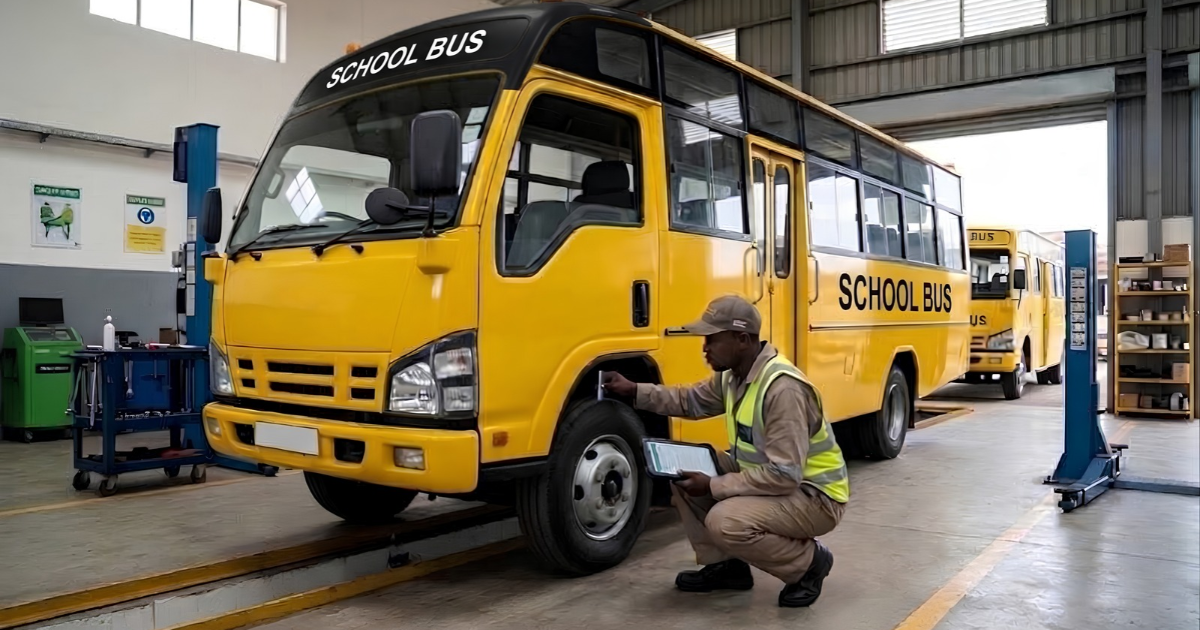
Before each journey, check the tyres, brakes, lights, mirrors, doors, emergency exits, and seat anchorages. The driver is often the first to notice a fault, so the school needs a simple process for reporting defects to someone who can assess them. A vehicle with a defect that affects safe or lawful operation should stay out of service until the fault is corrected. A route deadline does not outweigh that.
In Kenya, NTSA has issued guidance on school transport safety requirements, including functional speed limiters. Schools and operators should verify the requirements that currently apply to their vehicles and include relevant equipment checks in their routine procedures.
2. Maintenance and Repair
Routine checks catch many faults, but planned maintenance prevents others from developing. Each vehicle should have a service schedule based on the manufacturer’s recommendations and applicable requirements. The schedule should show when servicing is due, who books it, and how outstanding repairs are followed up.
Driver reports should inform maintenance decisions. A problem reported between services may need attention before the next appointment, so the school needs a way to decide whether a vehicle can keep running or must be taken off the road.
Each vehicle should also have its own maintenance history covering servicing, repairs, and replaced parts. Over time, this history shows recurring faults and supports decisions about replacement. It is also useful when a vehicle changes routes, changes ownership, or is assessed by an inspector or insurer.
3. Inspection and Certification
Maintenance keeps a vehicle working. Formal inspection checks it against the standards that apply to its category and use. Both are needed.
Schools should know which inspections and certificates apply to each vehicle, when they are due, and who arranges them. Requirements vary by vehicle classification and type of operation, so confirm the rules for each vehicle rather than relying on a general checklist.
In Kenya, schools and transport operators should check current NTSA guidance on inspection certificates, Road Service Licences (RSL) and insurance, as well as any other requirements applicable to their vehicles and operations. Regulatory directives can change, so information should be verified before relying on it.
Inspection paperwork must match the vehicle it covers. A certificate issued for a different vehicle does not cover the bus in use. Record each vehicle’s registration number, inspection date, and expiry date, and check them regularly.
If an inspection finds defects that prevent safe or lawful operation, the vehicle should stay out of service until the necessary work is done and any required reinspection or clearance is obtained. Record what was flagged, who is responsible for fixing it, and when the vehicle returns to service.
4. Vehicle Documentation and Records
Checks, maintenance and inspections all produce records that may need to be shown on request. For each vehicle, this usually includes registration documents, insurance, inspection certificates, and maintenance history. The school or operator may also need licences, permits, contracts, and policies.
Insurance needs particular attention. Confirm with the insurer that each vehicle is covered for carrying students. Holding an insurance document alone does not show that the cover fits this use.
Driver and staff records belong here too. The school should be able to show who was assigned to each vehicle or route on a given day and that each person’s qualifications are current.
Records are useful only if they can be found quickly. Keep one place for each type of record, use consistent names, and track renewal dates so that expired documents do not go unnoticed. For outsourced transport, the service agreement should set out which documents the operator must provide and how updates will reach the school.
5. Drivers and Transport Staff
A well-maintained vehicle with current documents still depends on the people operating it. Schools and operators should confirm that each driver holds the licence and qualifications required for the vehicle and track expiry dates for licences and training.
In Kenya, NTSA guidance addresses driving licence classes and Public Service Vehicle (PSV) credentials. Schools and operators should verify the current requirements for each driver’s role rather than assume that the same requirements apply to every vehicle or transport arrangement.
Where bus attendants are used, their responsibilities should be written down. They need to know how to work with the driver, how to raise concerns and how student handover works. Schools should also confirm the training and checks currently required for attendants rather than assuming that proposed requirements apply.
Drivers and attendants also need a clear way to raise concerns about vehicles or operations. If a recurring fault or a problem during a journey goes unreported because staff are unsure who to tell or fear being blamed, the school cannot act on it. A simple reporting route and a commitment to respond, keeps the system working.
6. Maintaining Compliance During Daily Operations
Compliance is tested every school day. The checks and defect reporting in section 1 are the first line of this work. When staff responsibilities or assignments change, schools need to make sure that important procedures and information are not lost in the transition. Vehicles should carry no more passengers than their permitted capacity and should run only the routes they are approved for. Drivers should be authorised for the vehicles they operate. When a vehicle or driver is replaced at short notice, check that the replacement is qualified, appropriately documented, and covered before the journey starts.
Record every incident, whether a minor collision, a breakdown or a student left behind, along with the action taken. Corrective actions show whether the school learns from problems, so review them as well as the incidents themselves.
Keep driver-to-vehicle and driver-to-route assignments current, so the school can establish who was responsible for a given vehicle and route on any day.
Conclusion
Vehicle compliance is an ongoing responsibility, not a task completed before the school year begins. Inspections, servicing and staff checks recur, and the records that support them must keep pace. Schools that build compliance into daily operations are better placed to answer questions and address problems than those that prepare only when an inspection is due.
A practical starting point is to list every vehicle and driver, then check each against the six areas above. Note what is current, what is missing, and what is due soon. That exercise usually shows where the gaps are and which to close first.
Ultimately, compliance should be part of how the transport service is managed every day. Clear responsibilities, consistent processes, and accessible information help schools maintain oversight of their transport arrangements.