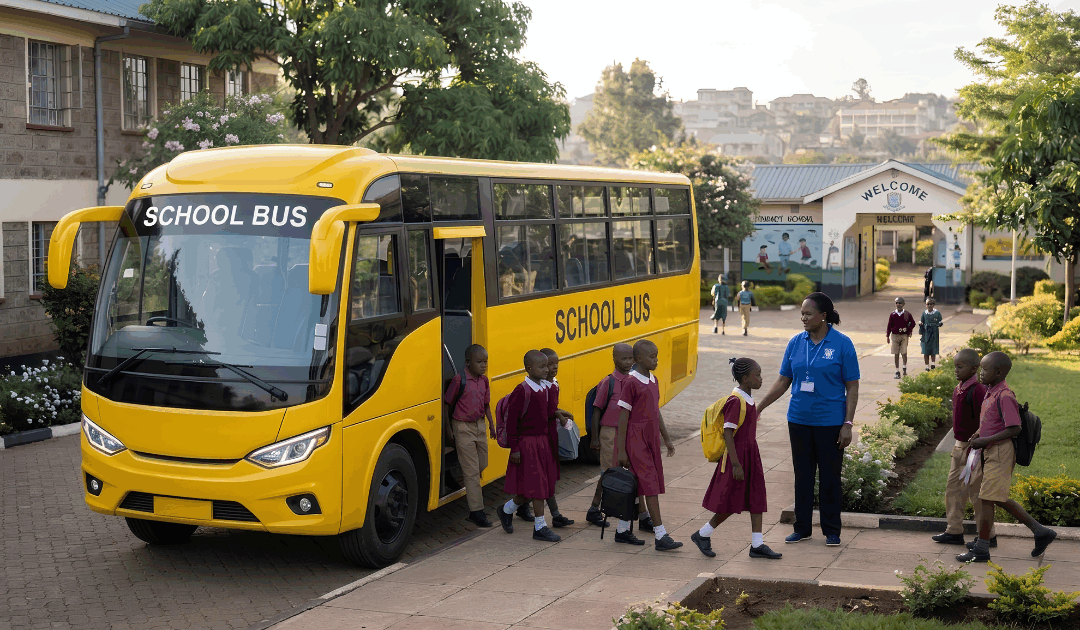
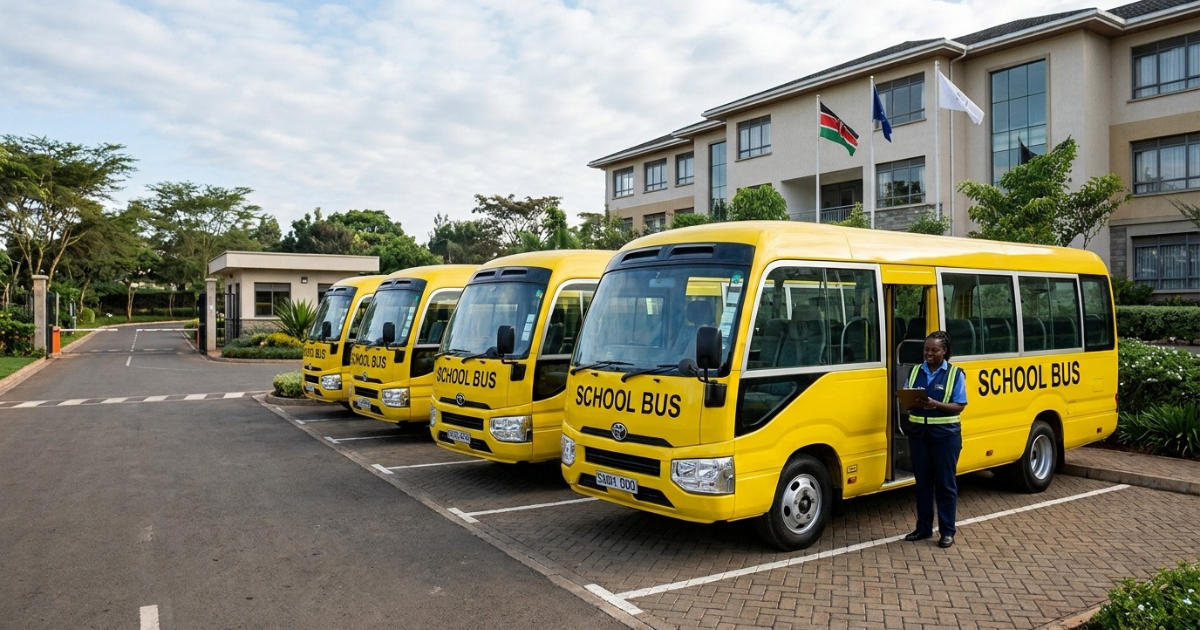
Opening a new campus is exciting, but on the first morning many school leaders discover that the transport plan has gaps. The buses arrive on time, the students are ready, and then small problems start to surface. A pickup point is unsuitable, one route takes far longer than expected, and parents are not sure who to call when a bus is late.
Most of these problems can be anticipated. This article sets out the decisions schools should make before opening day, the responsibilities that come with running a transport service, and how to review the operation once students are on board.
Start with the Journey, Not the Map
A new campus changes the daily journey for every family that uses it. The question is not only where the buses need to arrive but also how each child gets from home to the classroom.
Begin by looking at the campus in relation to the surrounding residential areas, the main roads and the existing catchment areas. Consider how far families are likely to travel and what that means for pickup times and journey lengths. A campus that seems close on a map may be a long drive in the morning traffic.
Plan for the whole journey, from the student’s pickup point to the classroom, rather than only the distance from the depot to the campus. Local traffic, road access and the routes families are likely to use all shape what a workable service looks like.
A transport plan should reflect how students and families will actually reach the new campus.
Understand Your Student Population
Before deciding how transport will work, schools need a realistic estimate of enrolment. That estimate should include where students are likely to live, including areas where enrolment is expected to grow.
Student numbers and their distribution determine how many routes, pickup points and vehicles are needed. Age matters as well. Younger students often need closer supervision and simpler pickup arrangements. Older students may be more independent and have different travel patterns.
Identify students with additional support, accessibility or medical needs early. Arrangements for these students take time to put in place, and they are much harder to make on the first morning.
Plan for change, too. Initial enrolment numbers are rarely the final picture, so leave room for growth.
Planning around who will actually use the service is more reliable than planning around assumptions.
Plan the Routes, Stops and Fleet Capacity
The order of pickup stops affects both the total journey time and how long each student spends on the bus. A route that is fastest overall can still leave some children on the bus much longer than others. Test different stop orders before settling on one.
Assess each potential pickup point for accessibility, road conditions, safe stopping space, and general suitability for children. A point that looks convenient on a map may be unsafe once buses start stopping there.
Illustration (hypothetical scenario): Picture a school opening a campus on a busy road where morning traffic builds up quickly. The planned route looks like 40 minutes on paper, but a trial run at 7:00 a.m. takes nearly an hour. The school moves two pickup points and starts the first route earlier. Without the trial run, the problem would have appeared on the first day, when parents were already watching the clock.
Trial runs should use the actual roads at the times students will travel. Estimated distances rarely reflect the real morning experience.
Then review the fleet. Ask whether current vehicles can carry the expected number of students, whether vehicle sizes suit the roads on each route, and whether the school will need additional vehicles or an outsourced provider. Consider whether there is enough capacity for future enrolment growth.
Finally, plan for the unexpected. What happens if a vehicle breaks down on a Monday morning? Maintenance arrangements and a backup vehicle or provider should be in place before opening day.
Route planning and fleet capacity should be assessed together, so the school knows whether the service is practical and sustainable.
Define Responsibilities and Accountability
Schools need to decide how the transport service will be run. The main options are an owned fleet, an outsourced provider or a combination of both. Each arrangement brings different responsibilities, but the school still needs clear oversight of the service and a reliable way to respond to parents’ concerns.
Make clear who is responsible for each part of the operation: driver and vehicle readiness, route planning and changes, responding to delays, communicating with parents, recording boarding and drop-off, and following up on incidents and concerns. When something goes wrong, families should know exactly who to contact.
Before signing with an external provider, ask detailed questions about how it operates. Our earlier article, What to Ask a School Transport Provider Before You Sign, covers the questions schools should put to a provider, from driver vetting to response times.
Document these responsibilities, service expectations and reporting procedures in the contract or an internal operating agreement. Accountability should be agreed in writing, not worked out after a problem has happened.
Accountability should be settled before transport begins, not after the first serious problem.
Establish How Student Journeys Will Be Recorded
Knowing where a bus is and knowing which students have boarded are two different things. A vehicle can be on the right road and still have students missing from the list. Schools need reliable records of each student’s journey. We explored this gap in more detail in School Bus Tracking and Student Boarding Verification: Closing the Visibility Gap.
The records should cover:
- Students recorded as boarding.
- Students recorded as dropped off, and when.
- Expected students who have not been recorded as boarding.
- The follow-ups taken when records do not match the expected list.
- Transport issues that arose and how they were resolved.
Illustration (hypothetical scenario): Picture a school with a 6:30 a.m. pickup that notices that a Grade 4 student expected at the first stop has not been recorded as boarding. The transport attendant checks the expected student list and contacts the family before the bus continues. The family confirms that the child is travelling by private arrangement that morning. Without a clear boarding record and follow-up procedure, the school might only discover the discrepancy when the child fails to arrive.
These records support accountability and help staff respond quickly to discrepancies. They also connect to safeguarding. Parents trust a school with their child’s journey, and accurate records are part of earning and keeping that trust.
Technology can make this process more reliable. Systems such as NFC keyfobs assigned to individual students can record boarding and drop-off. But the technology has to work alongside clear staff responsibilities and follow-up procedures. A record is only useful if someone checks it and acts on what it shows.
Schools need to know which students have been recorded as boarding and whether each journey has been accounted for, not only where the vehicles are.
Prepare Parents and Staff Before Opening Day
Families should know how the transport service will work before the first school run. Share confirmed routes and pickup points, realistic time windows for pickup and drop-off, guidance on being ready at the stop, and contact details for enquiries and delays. Parents should also understand how they will receive relevant journey updates.
Brief everyone who will be involved: drivers, attendants, campus staff, and transport administrators. Each person should understand their role and what to do about a missed pickup, a delay or a change to the student list. A short walkthrough of common situations, done before opening day, saves time when those situations arise. For a picture of the day-to-day work involved, see A Day in the Life of a School Transport Manager.
Plan communication for the first few weeks, not just the first day. Set up a clear way to collect feedback from parents, drivers, attendants and campus staff, and make sure someone is responsible for reviewing it. Early feedback helps schools spot problems before they become recurring concerns.
When parents and staff understand the service before it starts, it helps the first weeks run more smoothly.
Review and Adjust the Transport Operation
Routes and schedules that look right during planning often need changes once students are using them. Treat the transport operation as something to monitor and improve, not a plan that is finished once the buses start running.
Watch a few key measures after launch: actual journey times compared with planned times, how long individual students spend on the bus, recurring delays, unsuitable pickup points, changes in enrolment and where students live, boarding and drop-off records, and feedback from parents and transport staff.
A simple review schedule helps:
- After the first two weeks: Identify immediate problems and make adjustments.
- At the end of the first term: Assess how well routes, schedules, and communication are working.
- At the start of each new term: Reassess in light of enrolment changes and new transport needs.
Review sooner if recurring problems, significant changes or safety concerns arise. For schools managing changes to their student population, the review should begin with an updated list of expected students and their pickup points.
Key takeaway: A new campus’s transport service should be reviewed and improved regularly, not left as it was on launch day.
Plan Ahead for a Smoother First Day
Opening a new campus requires transport planning that considers students, families, vehicles, routes, staff responsibilities, and communication. A successful launch depends on decisions made before the first school run and on the school’s willingness to review and adjust arrangements afterwards.
Use this checklist before opening day:
- Understand the campus location and expected catchment areas.
- Assess student numbers, age groups and individual transport needs.
- Confirm routes, pickup points and vehicle capacity, with trial runs at school travel times.
- Define responsibilities between the school and any transport provider.
- Set up student boarding and drop-off recording procedures.
- Brief staff and communicate arrangements to parents.
- Set up a process for collecting feedback and reviewing the service.
Schools opening a new campus need more than vehicles on the road. They need clear records, reliable communication and better visibility of student journeys. Plan those before the first bus leaves. Explore how Bunifu Go supports school transport management, or get started with your campus plan today.