Ten minutes of guesswork. Every school day. For parents across Kenya.
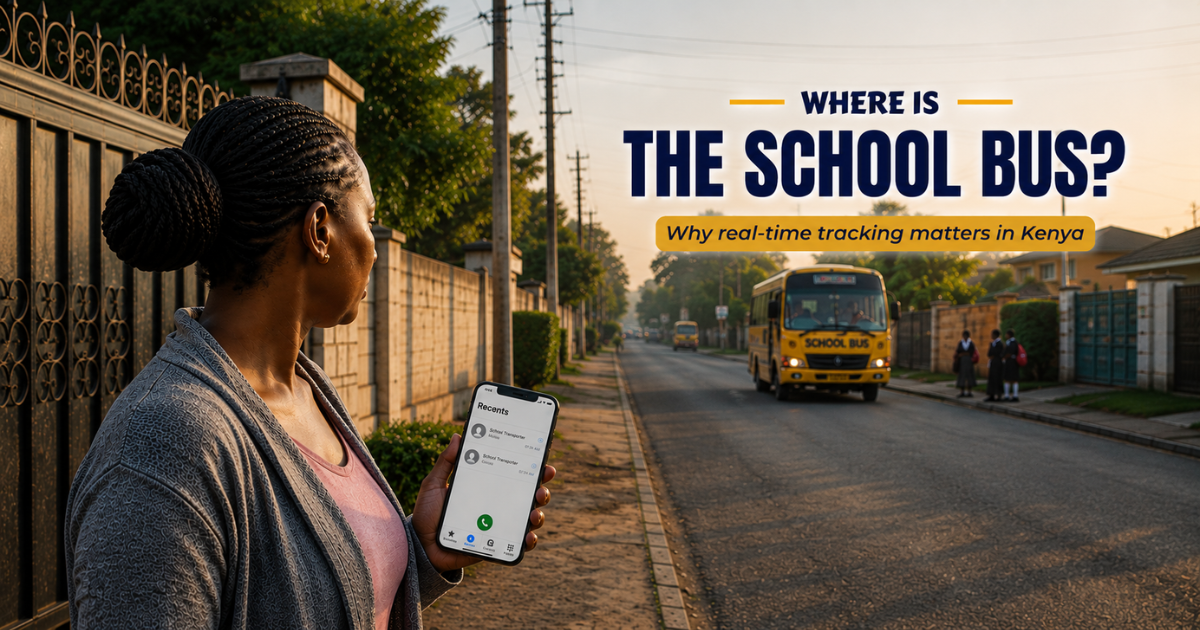
Parents stand by the gate, phones in hand, doing the math nobody wants to do. Seven minutes could mean nothing: a traffic jam near the roundabout, a slow child at the last stop, or a driver who took the longer way to dodge the matatus cutting lanes near the market. Or it could mean something else. From where they are standing, there is no way to tell the difference.
So they wait, phone unlocked, thumb hovering over a call they don’t want to make, running through both possibilities at once.
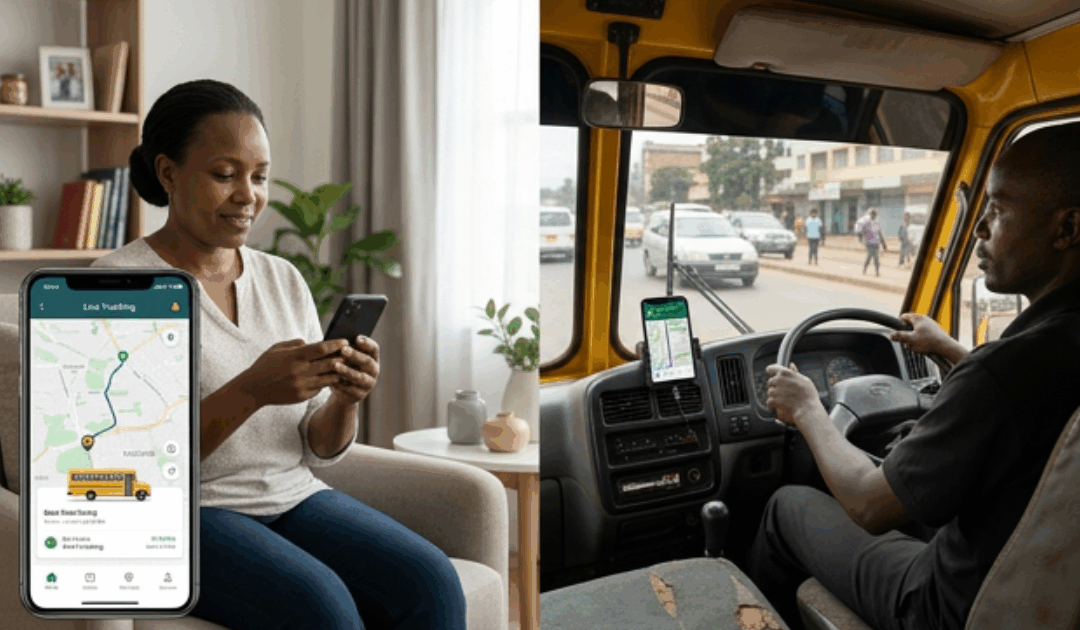
This is the gap real-time school bus tracking in Kenya is designed to close. Instead of wondering where the bus is or whether it is running late, parents can have greater visibility into the journey while schools gain better oversight of their student transport operations.
A Problem That Repeats
A single scary moment fades with time. This doesn’t. It happens every school day, in households across the country, whether or not anything is wrong that day. By the time the bus turns the corner, usually fine, usually just traffic, something has already happened to the parent standing there. Not a crisis. Just seven minutes they’ll never get back and won’t remember specifically, because it happened yesterday too and will happen again tomorrow.
Ask them what they’d actually want in that moment, and it’s rarely complicated. Not a promise. Not a policy. Just an answer: Where is the bus right now? It’s the same expectation that ride-hailing apps already answer for them: where is the ride, and when will it arrive? School transport, for most families, still hasn’t caught up to it.
What the Waiting Actually Trains You to Feel
Call the school office at minute eight, and you’ll usually get a shared shrug, a staff member who knows exactly as little as you do, because the driver hasn’t called in yet either. That’s not reassurance. It’s two people confirming to each other that neither of them has an answer.
Do that enough times, and something shifts quietly. It’s not that a parent starts expecting disaster. It’s that “probably fine” stops being the default and starts being something they have to talk themselves into every single time the bus is late, even on the mornings, which is most of them, when it really is just the jam by the roundabout.
The Barrier Isn’t the Technology Anymore
None of this needs solving from scratch. A live map that turns “no idea” into “six minutes away, past the market” is the kind of tool most parents already carry in their pocket for everything except the one journey that matters most to them. What’s missing usually isn’t the technology; it’s momentum. A school that hasn’t yet made this a priority, often simply because no parent has forced the question loudly enough to move it up the list.
That’s a very different problem from ‘this technology doesn’t exist.’ And while cost still matters, it isn’t the only question anymore. It’s closer to nobody having decided yet that a parent standing at a gate deserves a better answer than a shrug.
What Parents Are Actually Asking For
Parents aren’t necessarily asking for a complicated technology system. They’re asking for simple answers.
Where is the bus?
When will it arrive?
Has my child boarded?
Has my child arrived?
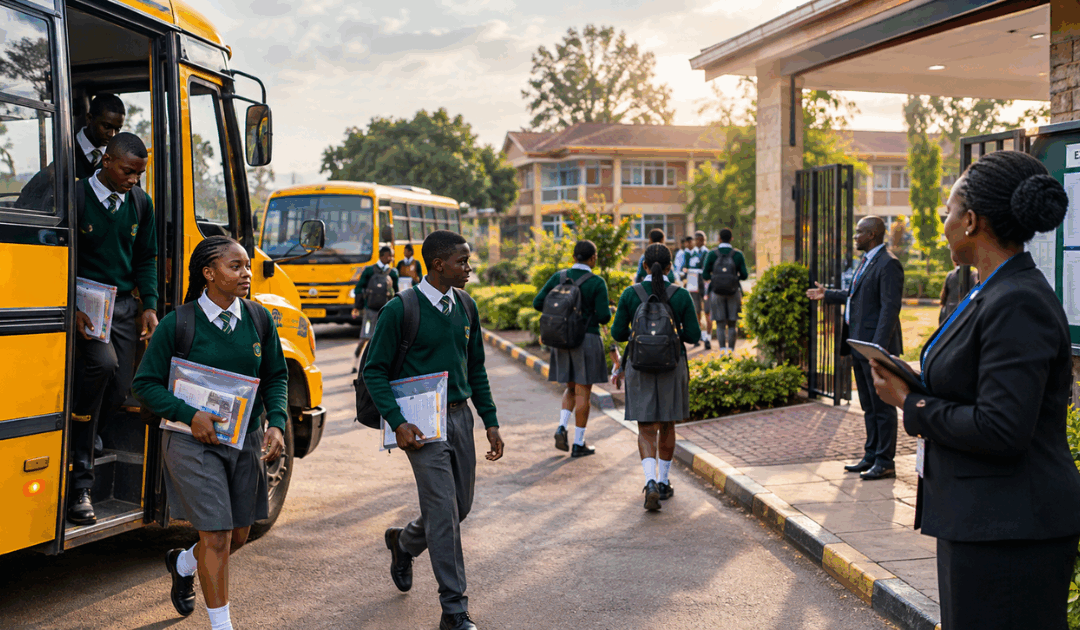
Real-time tracking turns those questions into information parents and schools can simply see, rather than questions that require a phone call, a live location, an honest arrival time, or a notification the moment a child boards or gets off.
The technology may be sophisticated behind the scenes. The experience for the parent should be simple.
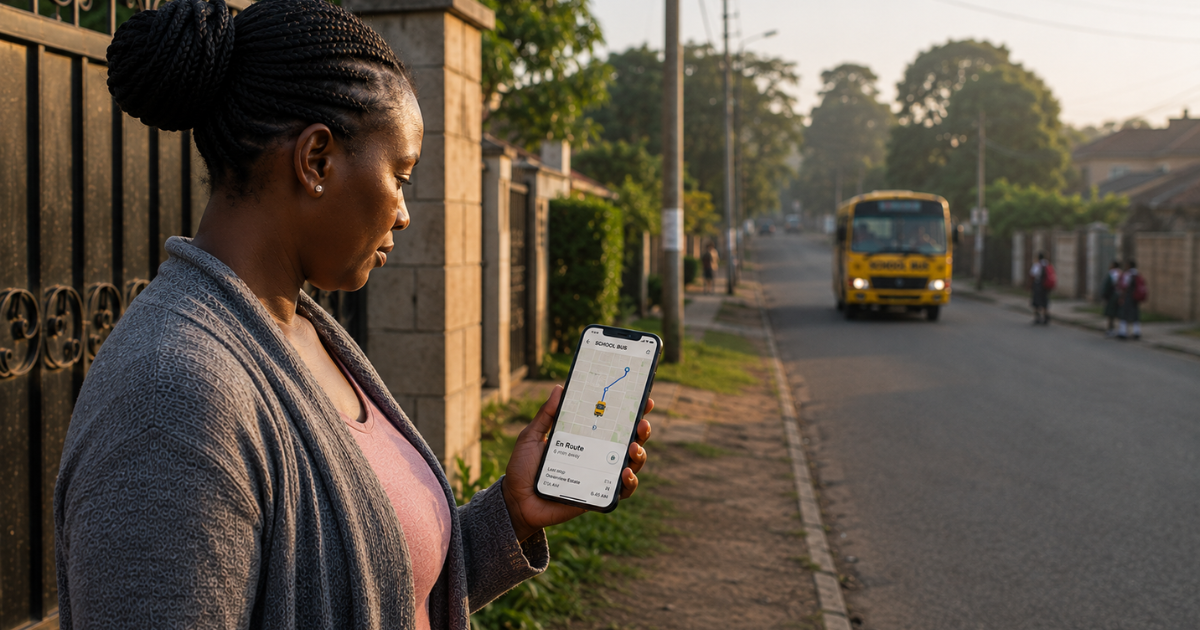
No more guessing, real-time tracking shows parents where the school bus is and when it’s approaching.
Where This Actually Starts
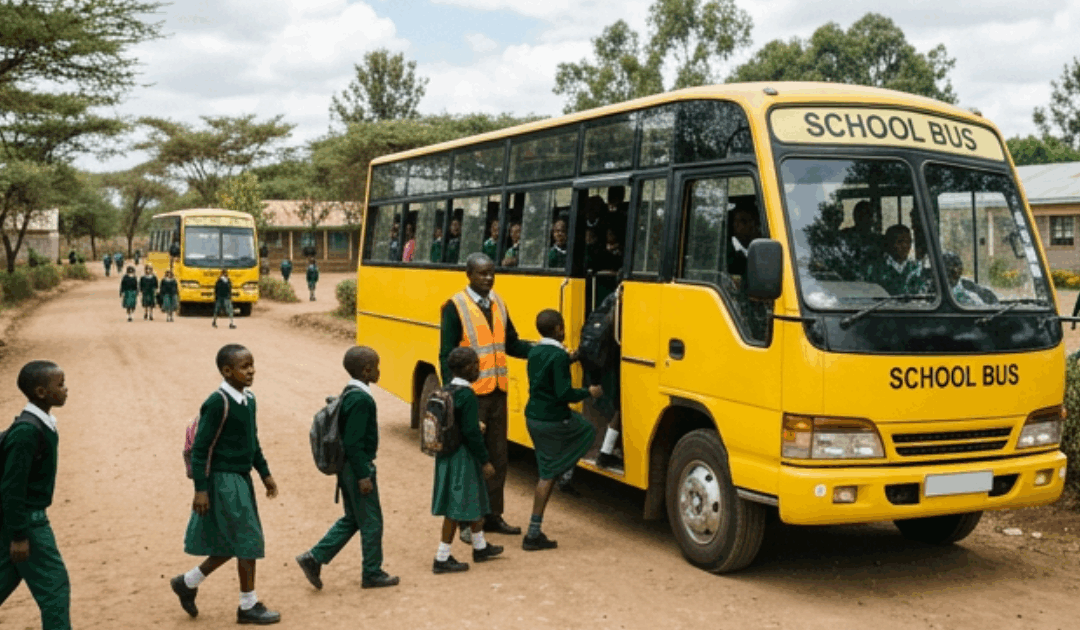
It doesn’t take a citywide rollout to end this. It takes one route, usually the one that generates the most anxious calls to the office, getting a live map and an honest ETA instead of silence, and a notification the moment a child actually gets on and actually gets off. Once that route runs for a term and parents notice they’ve stopped calling the office at all, the case for the rest of the fleet tends to make itself.
The Real Fix
The ten minutes at the gate was never really about the bus running late. It was about a parent having no way to tell “running behind” from “something’s wrong” and filling that silence themselves every morning, alone. That gap has a straightforward fix. It just requires one school deciding a shared shrug is no longer good enough to hand a worried parent.
Ready to replace the guessing game with visibility?
Bunifu Go gives schools a clearer view of their transport operations while keeping parents informed throughout the journey. From real-time bus tracking to student movement notifications, the goal is simple: Every journey visible. Every Child Accounted For.