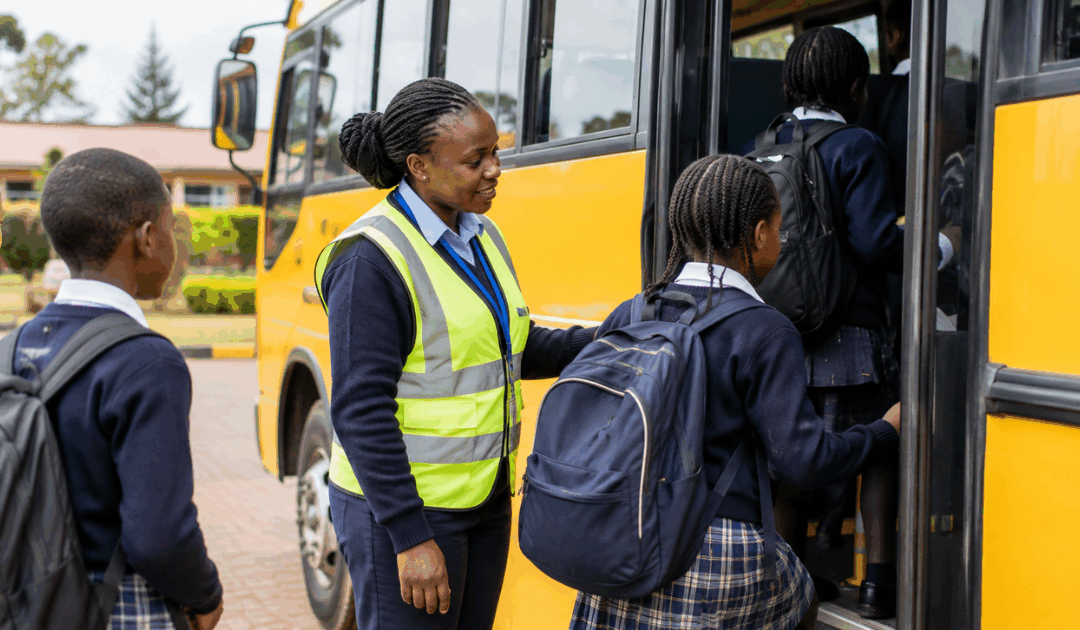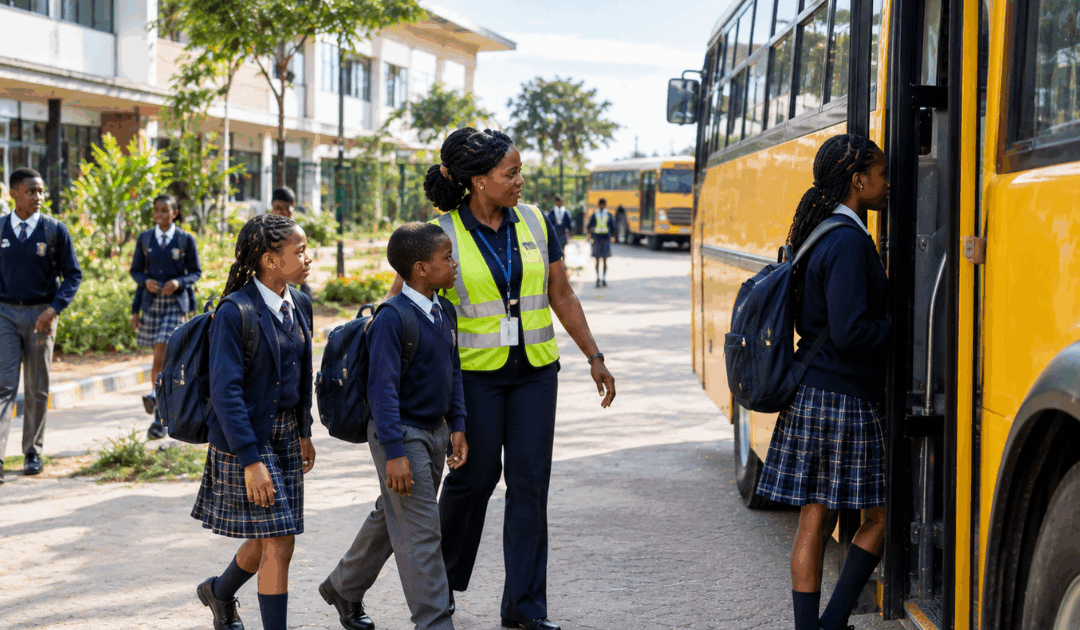
Road safety for learners is not a side issue in Kenya, it’s a documented crisis. NTSA has reported that children under 18 account for roughly 30% of all road crash victims in the country, a figure the authority has called alarming enough to justify a full overhaul of school transport regulation. For any school running its own buses or vans, that statistic changes the conversation about transport technology. Real-time tracking stops being a convenience feature and becomes part of how a school actually meets its duty of care.
This guide walks through what real-time school bus tracking is, how it lines up with Kenya’s current NTSA requirements, and the concrete ways it protects students day to day.
Why this is a regulatory issue, not just a comfort feature.
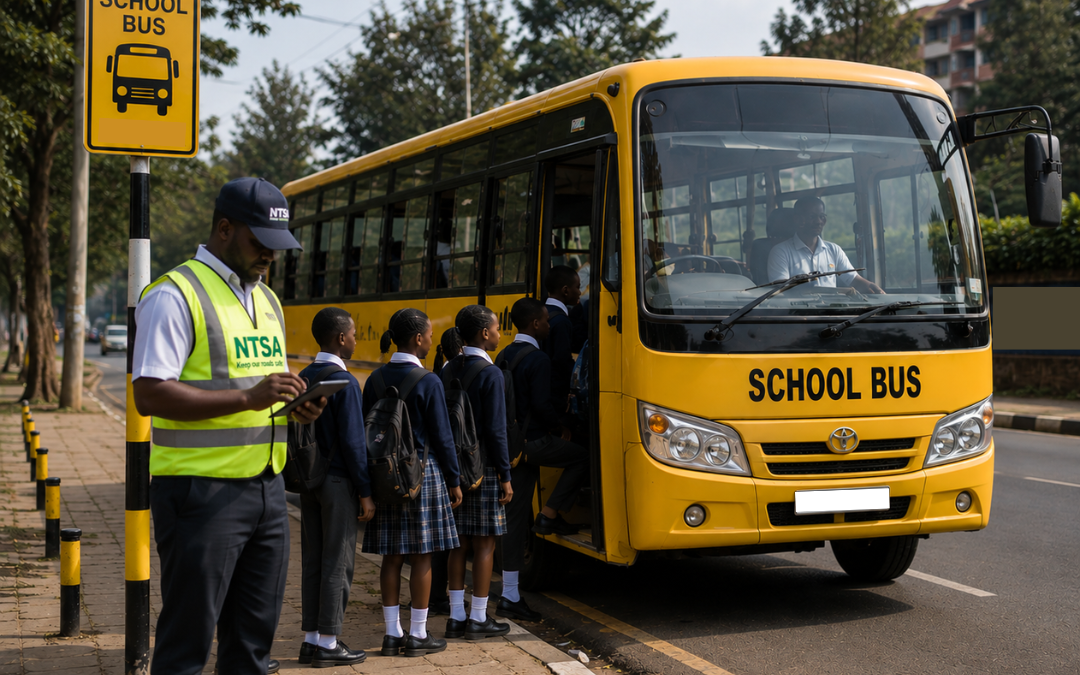
An NTSA officer monitors school children boarding a school bus as part of efforts to promote safer school transport.
Under NTSA’s Operation Watoto Wafike Salama campaign, schools are now expected to meet a detailed safety checklist before and during every term: roadworthy vehicles, properly licensed and medically fit drivers, functional seatbelts, and adherence to approved routes. NTSA has been explicit that route deviations expose learners to unnecessary risk, and the authority has also flagged that most school transport incidents happen during boarding, alighting, and at pedestrian crossings, not mid-journey.
That is a specific and verifiable set of requirements. And it’s exactly the set of things a paper register and a driver’s personal phone cannot verify after the fact.
How real-time tracking maps to what NTSA actually asks for.
Route adherence and geofencing. A pre-set route with geofenced boundaries means the school knows immediately if a bus deviates from its approved path, turning NTSA’s route requirement from a paper policy into something that’s actually monitored, not just promised.
Boarding and alighting verification. Since NTSA’s own data points to boarding and alighting as the highest-risk moments, this is where digital attendance earns its place. An NFC tap or biometric check-in creates a timestamped record of exactly when a student got on or off, at exactly which stop, turning the riskiest moment of the trip into the most documented one.
Operating window compliance. NTSA restricts the hours school transport vehicles are permitted to operate. A system that logs actual trip start and end times gives a school a straightforward way to demonstrate it’s operating within the approved window, rather than relying on informal driver schedules.
Faster incident response. If a bus is delayed, breaks down, or deviates from route, real-time location means the transport office knows within minutes, not after a worried parent calls. That gap, between something going wrong and the school knowing about it, is where real safety risk lives.
An auditable safety record. Trip logs, GPS history, and driver behavior data (harsh braking, speeding) don’t just help after an incident; they give a school something to show during an NTSA inspection and something to review proactively rather than only reactively.
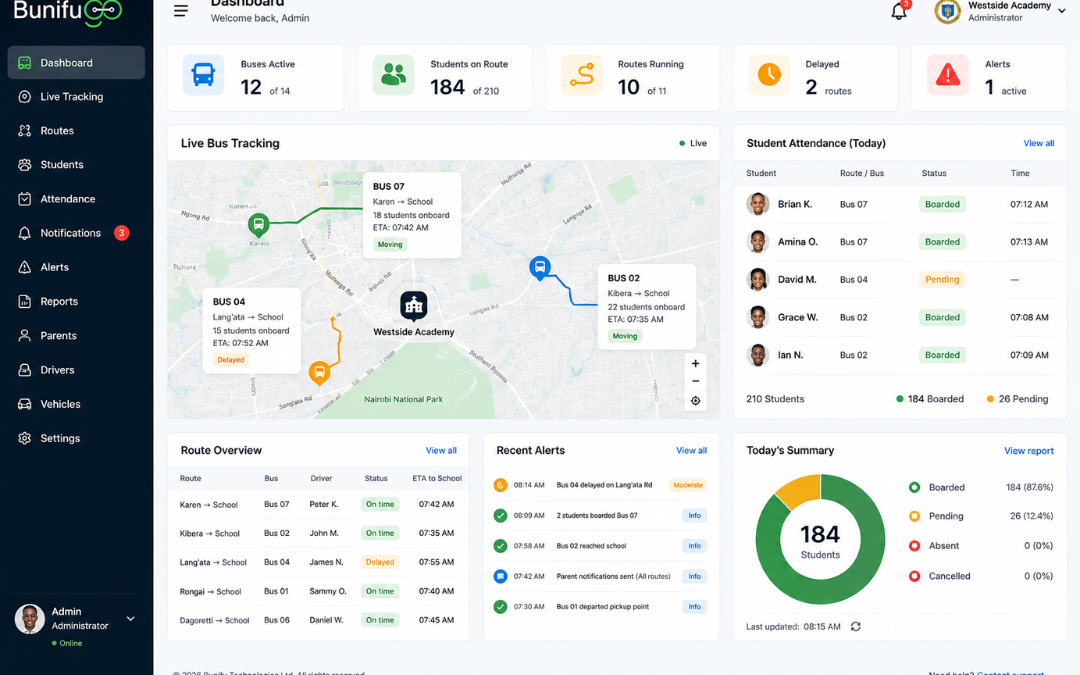
School transport management dashboard showing live bus locations, student attendance, route status, alerts, and daily activity.
What this means for parents
For a parent, none of the regulatory language matters as much as one simple thing: knowing their child is safe, in real time, without having to call the school to check. Schools that have made this shift describe the same pattern: fewer anxious phone calls and parents who trust the information they’re getting automatically. See how BunifuGo can help you get there.
FAQ
What is real-time school bus tracking? It’s a GPS-based system that shows a school transport vehicle’s exact location as it moves, usually paired with route geofencing, so administrators and parents can see where a bus is at any point in its trip rather than only at pickup and drop-off.
Is GPS tracking required by NTSA for school transport in Kenya? NTSA does not currently mandate GPS tracking by name, but its requirements, approved routes, defined operating hours, and accountability for deviations are difficult to reliably demonstrate without it. Regulations in this area have been tightening, so schools should treat this as a fast-moving area to watch, not a settled one.
How does GPS tracking help during a school bus emergency? It cuts the time between something going wrong and the school knowing about it. Instead of waiting for a driver to call or a parent to report a delay, the transport office can see a deviation, stop, or delay as it happens and respond immediately.
The bottom line
NTSA’s own data makes the stakes clear, and its own checklist makes the requirements specific. Real-time tracking is the most direct way for a school to turn “we take safety seriously” from a statement into something it can actually demonstrate to parents and to regulators.
Start your free trial today and see how Bunifu Go’s real-time tracking helps your school meet Kenya’s school transport safety standards.