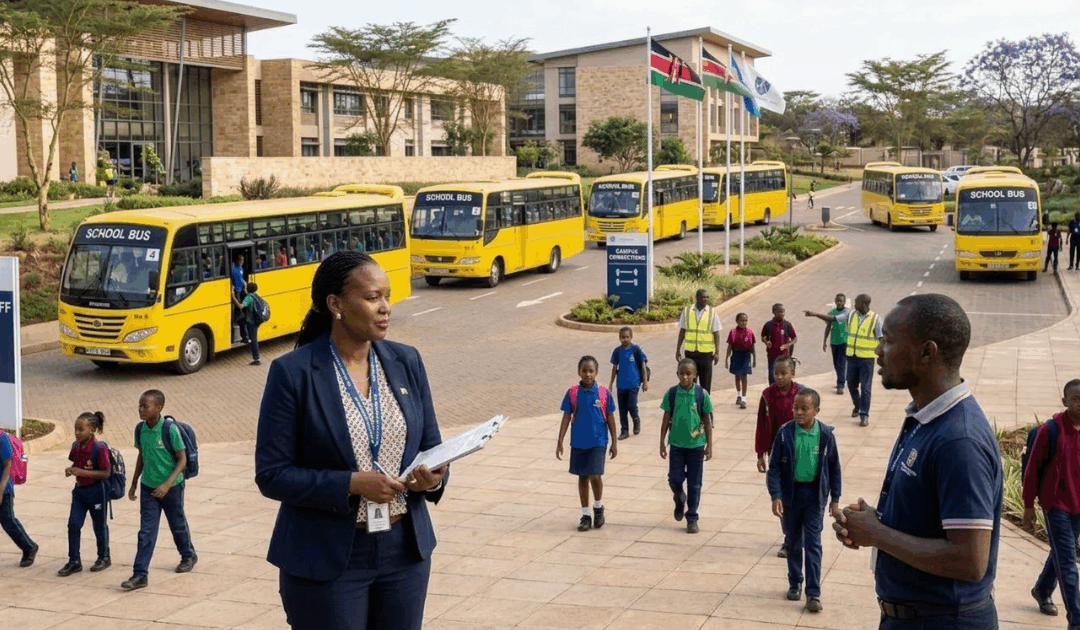
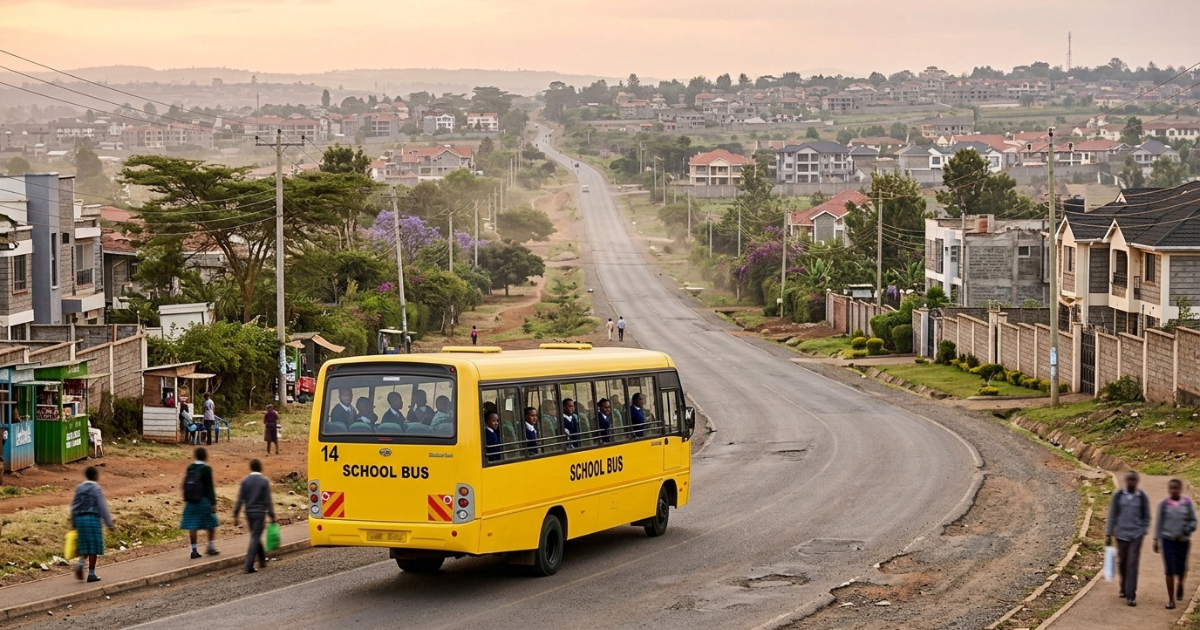
On a map, a school’s catchment looks like the spokes of a wheel. Most children live close to the centre, but a few live far beyond the nearest stops, and the routes that reach them stretch outward like the longest spokes. Each extra stop brings transport within reach of another family, but it also lengthens the journey for the children already on board. Those children are usually the ones who have been on the bus the longest.
Long-route transport is therefore about more than distance. Stop order, traffic, pickup arrangements and the number of children on each route all shape how long a journey takes and what it costs to run. Schools have to balance the families they serve against journey times, operating costs, and the needs of the children travelling.
Why Long Routes Are Different
A route can look reasonable on a map and still take an hour in the morning. Several pickups spread across different neighbourhoods, or a peak-hour traffic jam on the main road, can turn a modest distance into a long ride. Distance tells a school little about what a child actually experiences.
Children who are collected early can spend a long time on the vehicle before reaching school. Children living farthest away can face long journeys at both ends of the day. The school should look at the whole day, not just the morning run.
Cost follows the same pattern. A route that is half empty for most of its length is expensive to run and hard to justify, even when it serves a family that genuinely needs it. The question is not whether to shorten every route, but whether each one serves its families in a way that is practical, manageable, and right for the children on it.
Setting a Ride-Time Standard
Every school needs a clear standard for how long students should spend travelling. Without one, there is no way to tell when a route needs attention or whether a change has helped.
Start by measuring what actually happens. For each route, record when the first child is collected, when the last child boards, when the vehicle reaches school, and how long the return journey takes. Compare those times with the intended schedule rather than relying on estimated driving distances.
Then look for patterns. A single delay caused by unusual traffic is not a route-planning problem. Repeated delays on the same route usually are, and they often point to a poor stop order, an overloaded schedule or a route that needs redesigning.
The standard itself should reflect the children’s ages and needs, road conditions, and the school’s safeguarding responsibilities. Its purpose is to give the school a benchmark it can use to spot problems early and judge whether a change is working.
Schools should also separate three things. A target is the journey time the school aims for on most routes. A limit is the point beyond which a journey must be reviewed. An exception process explains how a family can request an alternative, what evidence is needed and who decides. A school with all three can explain its position clearly. A school with only a vague sense of what is acceptable will struggle to justify its decisions when challenged.
Route Design: Where the Time Goes
Stop orders often matter more than distance. A route that crosses the same area twice, or doubles back to collect one child, can add minutes to every journey on it. Review where each stop sits, how many children it serves, and how long each pickup takes. A route that works well outside peak hours may become impractical in the afternoon, so test it at the times it will actually run.
Consolidating stops is one of the most useful changes a school can make. Where only two or three children are collected at each of many points, bringing them together at fewer locations can shorten the route considerably. Check that the new pickup point is safe, reachable and supervised, and explain the trade-off to families rather than imposing it.
A single collection point works well for children who live at the edge of the catchment, but it asks more of the families who must reach it. Some will find that easy, and others will not. Consider those families before the change, not after.
Sometimes the answer is to split one long route into two shorter ones. This shortens each child’s journey but adds a second vehicle, a second driver, and a second set of costs. The decision depends on how many children are affected, how long the original route takes, and what the school can sustain. Make the calculation explicit so the choice can be defended.
Protecting Children on Long Journeys
The longer a journey, the more supervision it needs. Children spend more time on the bus, the adults on board have more to manage, and a problem may happen far from the school. The school must be clear about who is responsible for each child for the whole journey, not only at the stops.
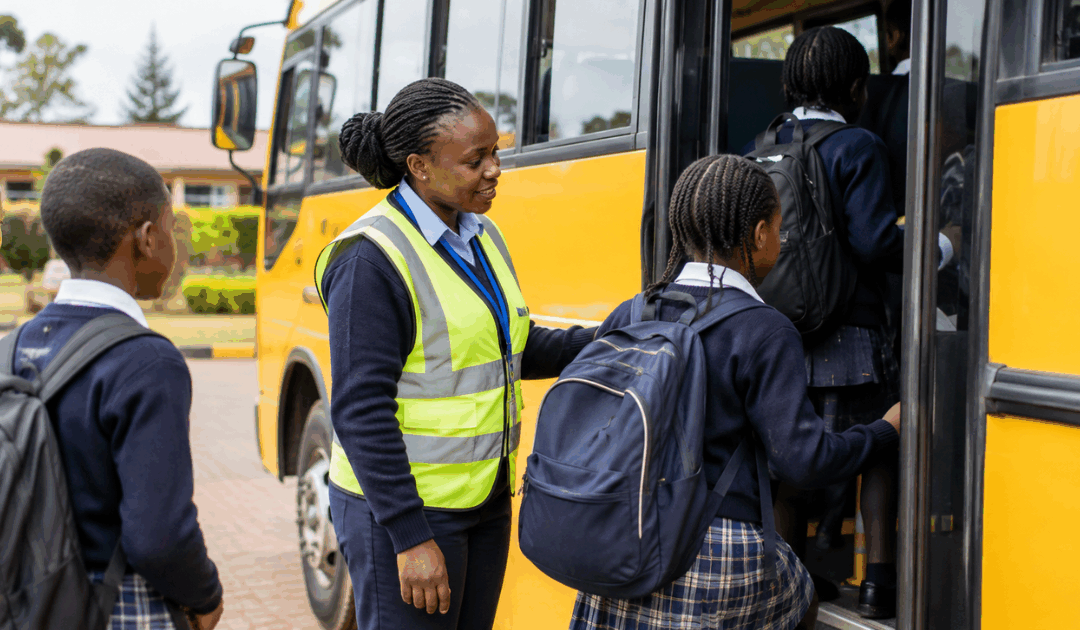
On long routes, the vehicle attendant helps children board and leave the vehicle, monitors safety and seating throughout the run, reports disruptive behaviour, and assists children with disabilities. These duties should be written down, backed by clear procedures, and understood by everyone working on the route. Schools should also set procedures for children who become unwell or distressed during the journey.
Procedures must also cover a child left at a stop or missing from the bus when expected. On a route with many stops, a missed child may not be noticed until much later. The procedure should be simple enough to follow under pressure, with one person responsible for raising the alarm.
Driver fatigue is a safety issue, not a matter of stamina. A driver making several long runs a day, through traffic and in the heat, tires by the afternoon, and tiredness shows up as slower reactions and missed details. Review drivers’ working hours and rest periods rather than assuming they will manage. Where a driver is scheduled for two long runs back-to-back, check that the timetable allows enough rest and can be operated safely.
Accountability depends on records. A child recorded as boarding at the first stop is a specific fact, and it becomes more useful when it can be checked against the rest of the journey. The article on school bus tracking and student boarding verification explains why vehicle location and boarding records answer different questions.
Keeping Families Informed
Parents on long routes need realistic expectations. A family told the bus will arrive at 7:15 that regularly arrives at 7:50 has a reason to be frustrated, even when the journey falls within the school’s standard. Give families an arrival window and explain what affects it. A window they can rely on is more useful than a single optimistic time.
Families also need a clear route to raise concerns. A parent who cannot find out whom to contact will call the front office repeatedly, adding pressure on staff who may not be able to answer. A named contact, a response-time expectation and a clear escalation process solve most of this.
When a route is long for a reason, say so. A short, honest explanation of why the route is as long as it is, and what the school is doing about it, usually prevents more conflict than a flat refusal. Families accept a long route more readily when they know the constraints and can see the school reviewing its options.
Reviewing Long Routes
A route that worked at the start of the year may not suit it by the middle. Student numbers, pickup locations, traffic, and timetables all change. Review every route at least once a term, and ask these questions:
- Are actual journey times within the school’s standard on most days?
- Which children have the longest individual journeys, and why?
- Does the order of stops still make sense given where children now live?
- Is the vehicle carrying a suitable number of children for the route?
- Are the operating costs justified by the number of children served?
- Can drivers and attendants carry out their duties within the current schedule?
- Can the school find the information it needs to investigate a delay, a boarding question or a complaint?
Review the catchment as well. Check whether admissions decisions take transport capacity and cost into account and whether the school is serving areas it can reasonably support. This is a difficult conversation, but it is better had deliberately than after a run of complaints.
Every review should end with decisions. Each issue needs an agreed next step, a responsible person, and a date to check progress. The following review then shows whether the change worked.
For the view of someone who runs these routes day to day, read a day in the life of a school transport manager. Driver records are also worth reviewing on long routes, so see how driver performance data helps school administrators run a tighter transport operation.
Conclusion
A journey-time standard does not promise to shorten every journey. It is a commitment to know how long children spend on the bus, decide what is reasonable, and act when a route falls outside that standard.
This week, list the five longest individual journeys on your routes. Review each stop sequence, find where time is being added, and decide which changes are practical. Even when the catchment cannot change, the route often can.
Schools that want to see how transport records support this work can explore Bunifu Go’s features. Schools ready to start can get started here.